
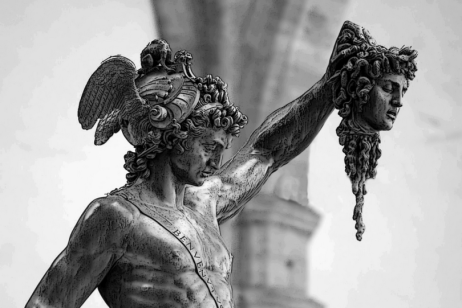
Today, I feel compelled to talk about heroes.
The word “hero” gets bandied about a great deal these days. It’s applied to almost anyone who has a dangerous job: firefighters, soldiers, cops, paramedics, and others.
As defined by Wikipedia, a hero is “one who, in the face of danger, combats adversity through impressive feats of ingenuity, bravery or strength, often sacrificing his or her own personal concerns for some greater good.” Given that definition, applying it to firefighters and soldiers (combat soldiers, anyway) is appropriate, even if its use seems hyperbolic at times.
It’s also a word that applies to the lives and works of people like Martin Luther King, Jr., Mother Teresa, and Mahatma Gandhi. They fought against great adversity and injustice for much of their lives, in the name of the greater good. King and Gandhi paid for that work with their lives.
Heroes can be found elsewhere, though. Such people are often not recognized for the heroic feats of bravery they perform in the face of adversity, perhaps because they seem unlikely candidates for the term “hero,” or perhaps because what they have done, the way they have tried to counter adversity or injustice, does not seem stereotypically heroic.
Nevertheless, now comes Mr. Walter M. Shaub, Jr. – bureaucrat, public servant –
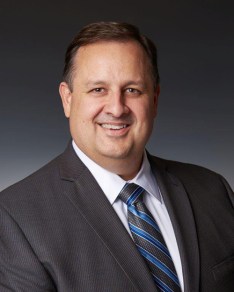
to prove to us that heroism can and does appear in unlikely places. His appearance on the public stage is a reminder that heroism such as his ought to be recognized, and applauded.
Like so much in America right now, this story is about the TiC[i]: Donald Trump, President-in-Waiting (waiting, but not silent). Mr. Shaub is director of the non-partisan U.S. Office of Government Ethics, a government agency that is generally unseen and unheard by ordinary citizens.
The reason we’re seeing and hearing Mr. Shaub now is a result of the TiC’s decision regarding potential conflicts of interest between his presidency and his business holdings. He has, with his usual unassuming brilliance, decided to turn over control of his little plutocratic fiefdom to his sons, Donald Jr. and Eric, assuring us that he will not know anything about his businesses during the next four years, because Don and Eric will not talk to him about those businesses. They will not speak a syllable about how much money they are making or losing, what kind of great deals the boys are making in dad’s absence, or which foreign governments or businesses are attempting to curry favor with the TiC by doing deals with the boys, or by staying in a Trump-branded hotel.
Nope – not a word. Not a hint, not a wink, not a nudge. Nothing. The whole thing will be as blind a bat as far as the TiC is concerned. Oh, except there’s that bat radar thing; a skill that lets a bat understand a great many things, without actually seeing them. By chirping. Or tweeting.

Mr. Shaub is not impressed with the TiC’s attempt to have it both ways: knowing about his businesses while pretending not to know. This sort of behavior is typical of the TiC, but that does not mean we should pretend that it’s ok; to just say that boys will be boys, and if they have sufficient star wattage, grabbing a woman’s vagina whenever you want is just so much silly locker room banter and … oh, wait … that’s a different ethical lapse.
Anyway, about Mr. Shaub and his concerns: One of the things that the TiC has said about himself and potential conflicts of interest is that being the president means you can’t have any conflicts of interest; that is, the fact of him being president means nothing he does can create a conflict of interest. By saying this, he was echoing something Richard Nixon said in 1977, during a series of interviews with David Frost: “Well, when the president does it, that means it is not illegal.”
There is a crucial difference here, though. Nixon went on to explain what he meant: for example, a president’s orders to carry out an operation for the sake of national security gives those carrying out the president’s orders the ability to do so without fear of breaking a law. It gives them cover, in other words.
Nixon then goes on to say something important about this issue: “… so that one does not get the impression that a president can run amok in this country and get away with it, we have to have in mind that a president has to come up before the electorate. We also have to have in mind that a president has to get appropriations from the Congress. We have to have in mind, for example, that as far as the CIA’s covert operations are concerned, as far as the FBI’s covert operations are concerned, through the years, they have been disclosed on a very, very limited basis to trusted members of Congress.”
The TiC seems to mean something rather different when he says, “The law’s totally on my side, meaning, the president can’t have a conflict of interest.” It sounds an awful lot like what other pronouncements by the TiC have meant: I am above the law. The usual rules do not apply to Donald J. Trump.
That is not exactly what the law says, though. It exempts the president (and vice president) from conflict of interest laws for two reasons: (1) the assumption that, given his wide ranging powers and scope of action, whatever a president does in office could create a potential conflict of interest; and (2) an assumption that the president can be trusted to do the right thing – that is, to avoid even the appearance of conflicts of interest.
I’d like to know how many of you out there believe that the TiC can be trusted to do the right thing … about anything, except what benefits Donald J. Trump personally and financially?
I thought so.
Mr. Walter Shaub agrees, without coming right out and saying so. Or at least, he doesn’t disagree.
“Now, some have said that the President can’t have a conflict of interest, but that is quite obviously not true. … [T]hey are referring to a particular conflict of interest law that doesn’t apply to the President. … But Congress understood that a President can’t recuse, depriving the American people of the services of their leader. That’s the reason why the law doesn’t apply to the President.”
Mr. Shaub goes on to say that “our common experience of human affairs suggests that the potential for corruption only grows with the increase of power. For this reason, it’s been the consistent policy of the executive branch that the President should act as though the financial conflict of interest law applied.” (Emphasis is mine.)
Reminding the TiC (by inference) that he is “now entering the world of public service,” Mr. Shaub writes, “I don’t think divestiture is too high a price to pay to be the President of the United States of America.”
Ah, but the TiC would disagree. So too does Rep. Jason Chaffetz (R-Utah), head of the House Oversight Committee (the committee that is supposed to protect entities like the Office of Government Ethics). He wants to haul Mr. Shaub up before that committee, behind closed doors, to ask him just what right he has to criticize that stunning example of American capitalistic genius at work; to wit, Donald J. Trump?
Several (Democratic) Congresspersons are standing up for Mr. Shaub, and demanding that any hearing be open to the public and the press, to make sure this is not a case of political retaliation by Rep. Chaffetz (which it most certainly is).
So, Walter Shaub qualifies as a hero, for the simple act of standing up in public and speaking the truth about the deceptive and inadequate actions of a man who will soon be president of the United States; a man who, through bullying and insults and demagoguery (and a little help from his Russian friends), has made his way into the presidency.
It was a great act of courage for Walter Shaub to go before the Brookings Institution on 11 January 2017 and speak the words he spoke. He must’ve known the backlash he would face, given the notoriously thin skin of the TiC, and the anti-democratic behavior of so many of his supporters (Mr. Chaffetz, for example).
This was a profile in courage on the part of Mr. Shaub.
Meanwhile, the TiC has recently said he wants to govern in the style of Ronald Regan and John F. Kennedy. As if to show his seriousness, the TiC said he would spend his first night in the White House sleeping in the Lincoln Bedroom.
If this were not so pathetically absurd, it would be funny. But there is nothing funny about the least serious president in our history. He is even less serious than George W. Bush, something I never thought I’d write. But there it is.
I hope we can all profit by the example of Walter M. Shaub, Jr. The next four years are going to require of us, that we too stand up in public and denounce the madness that will almost certainly spew forth from a Trump-inhabited White House (and New York suite). This emperor not only has no clothes, he has no ideas, no manners, and no sense of his own inadequacy. Indeed, it is the knowledge of the latter of those which seems to drive him to defend his supposed prowess in business and politics: the great man who never loses.
But he is a loser, because he is bereft of morals and empathy, and we must bravely, heroically, do everything we can to make sure that he does not take the country, and the world, down with him when he falls.
###
[i] TiC: Tweeter-in-Chief (see my previous posts)
 The Daily Outrage